

Weather in January
General Climate: Indonesia has a tropical climate with a November–March rainy season. January is typically one of the wettest months across much of the archipelago[3]. Expect high humidity (~80–85% in Bali) and daytime temperatures around 26–30°C (78–86°F) in many regions[4][5]. Nights remain warm (generally 22–25°C in lowlands)[10], though mountain areas can be cooler (e.g. Bali’s highlands drop to ~15°C at night)[11].
Bali: In Bali, January is peak monsoon. It’s typically the wettest month of the year, with 18–20 rainy days on average. The good news is rainfall is usually in brief bursts – you might have sunny mornings and a heavy shower by late afternoon[15][6]. Thanks to the rains, Bali’s countryside is at its greenest and most vibrant – rice terraces around Ubud are a vivid emerald, and forests are lush[16][17]. Coastal conditions vary: westerly monsoon winds can stir up rougher seas and wash debris onto Bali’s west coast beaches (like Kuta, Seminyak)[18][19]. In contrast, the east coast (Sanur, Nusa Dua) is more sheltered in this season, often with calmer waters and clearer conditions[18][20]. Ocean temperatures stay warm (~28–29°C)[21], but visibility for snorkeling/diving can be reduced near river outlets (the rainy season can flush rubbish and silt into the sea)[22].
Travel Trends & Visitor Activities in January
Aside from the very start of the month (New Year’s holiday), January is low season for tourism in Bali and most of Indonesia[1][33]. In fact, January–March sees the fewest visitors in Bali, meaning smaller crowds at popular spots and a more relaxed pace overall[1][34]. Once the New Year’s Eve revelers head home, the island becomes noticeably calmer by the second week of January[35]. For travelers, this off-peak period brings tangible benefits.
- Lower Prices: Flights to Bali in mid- and late January tend to be cheaper, as airlines drop fares after the holiday rush[36]. Hotels and villas also offer discounts and promotions during the rainier “slow weeks”[2]. It’s often possible to find excellent deals on accommodation – oceanview rooms and private pool villas at a fraction of high-season rates[37][38].
- Quieter Attractions: Popular temples, beaches, and tour sites are less crowded than in the peak months. You likely won’t need to jostle for space at Uluwatu Temple or Tanah Lot in January – these cultural sites feel more peaceful without the holiday throngs[39]. Restaurants and nightlife in tourist hubs (Kuta, Seminyak, Canggu) still have a buzz – these areas remain lively year-round – but overall traffic and congestion on the roads are much lighter than in July/August or Christmas time[35][39]. Navigating the island is generally easier, and you won’t need to book everything far in advance.
- Domestic Travel: Early January is summer break for Indonesian schools, so you might see some domestic tourists at destinations like Bali, but this is mostly around the New Year’s period. By mid-January, local travel also lulls. One mid-month holiday (the Prophet’s Ascension, see Events section) can create a long weekend, during which some Indonesians might take short vacations – but it’s nothing like the exodus during Eid or Christmas.
- Atmosphere: The overall vibe is laid-back. This is a time when many longer-term travelers, digital nomads, or return visitors choose to be in Bali, enjoying the island at a slower pace[40][41]. If you’re seeking a relaxed getaway or a creative retreat, January provides that breathing room. You won’t find packed beach clubs (except maybe a few busy nights around New Year’s) and can easily get last-minute bookings for tours or spa appointments.
Travel Tip: While bargains abound in January, plan around the weather. Schedule outdoor excursions in the mornings when it’s more likely to be clear[42], and leave some flexibility in your itinerary in case an afternoon downpour delays your plans. It’s wise to have a few “rainy day” activities (cooking classes, spa days, shopping, etc.) in your back pocket.
Popular Activities and What to Do
Don’t let the rains deter you – there is plenty to do in January for visitors, from cultural experiences to enjoying the lush outdoors. Here are some travel ideas and activities well-suited to this time of year:
- Enjoy Lush Nature: Bali’s landscapes are arguably at their most photogenic in the wet season. The Tegalalang rice terraces and others around Ubud are at peak green vibrancy thanks to the constant water supply[42]. It’s a great time for a scenic Ubud day trip – just go early in the day to catch the views before afternoon showers. Similarly, Bali’s waterfalls (Tegenungan, Kanto Lampo, Gitgit, etc.) are gushing with strong flow in January[43]. The rainforest around them is often misty and mystical, creating dramatic scenes for photography (just be cautious, as paths can be slippery). Some waterfall pools may turn brownish after heavy rain (due to churned-up sediment), but the spectacle of volume is impressive[43]. If you’re a hiker, major volcano treks (like Bali’s Mt. Batur or Java’s Mt. Bromo) are not ideal this month due to muddy trails and cloud cover[44], but shorter nature walks in rice fields or jungle valleys can still be rewarding between showers.
- Cultural and Spiritual Experiences: The wet season’s calmer tourist scene makes it a nice time to explore temples and cultural sites at a leisurely pace. You can wander important Balinese temples such as Besakih, Tirta Empul, or Uluwatu without the peak-season throngs. A bit of rain actually adds to the atmosphere – travelers have found places like Uluwatu Temple hauntingly beautiful on a moody, drizzly day with clouds hugging the cliffs[45][46]. Pack a sarong and an umbrella, and you can still enjoy the spiritual side of Bali. January is also perfect for wellness pursuits: consider joining a yoga retreat, meditation class, or spa day in Ubud. The sound of rain on jungle foliage during a massage or yoga session can be incredibly soothing[47]. With fewer people around, the wellness studios and retreats have a more intimate feel, and often off-season discounts are available. It’s a time when Bali’s famous “health cafes” and yoga barns are busy with long-stay visitors riding out the rain with a cup of jamu (herbal tonic) in hand.
- Indoor Workshops & Classes: When clouds gather, you can shift into indoor cultural workshops. Many tourists in January take the opportunity to learn something new. For example, you might join a Balinese cooking class – start the morning at a local market (less crowded than in high season) and learn to make dishes like satay and lawar in a traditional kitchen[48]. Other options include silver jewelry making in Ubud, or craft workshops (wood carving, pottery, etc.). These activities are fun and fully sheltered from the weather[49]. Likewise, visiting museums and art galleries is a good fallback.
- Surfing (Wet Season Style): Bali is a year-round surf destination; the wave patterns simply shift with the seasons. In January, the prevailing winds are westerly, so the east coast of Bali becomes the prime surf area[50]. Spots like Keramas, Nusa Dua, Sanur (Serangan) and others on the east/southeast coast tend to have cleaner offshore winds and are favored by surfers during the wet months[50][51]. The swell in January is generally smaller and less consistent than in the dry-season peak (you won’t get the huge barrels of Uluwatu now), but there are still fun waves to catch[52]. Beginners might actually prefer these smaller waves. Just note that storms can bring onshore winds at times, so you’ll have to watch the forecasts day by day. Surf schools in Kuta/Legian often relocate their lessons to Sanur or other sheltered spots if west-coast beaches are too messy. Water is warm (~29°C) so no wetsuit needed[53]. If you’re not surfing, be aware that on some west coast beaches, strong currents and rough water mean swimming is less safe in this season (always heed local flags/lifeguards).
- Diving & Snorkeling: Conditions for diving around Bali are mixed in January. The seas can be rough on some days, and rain runoff reduces visibility, especially around river mouths. Sites like Nusa Penida may have strong currents during the monsoon period[54], and there is also a seasonal issue of debris washing into the ocean on Bali’s south coast[22]. That said, diving isn’t completely off the table. Protected sites in Tulamben or Amed (east Bali) might still be diveable when conditions permit, but always check with local dive centers.
Key Insight: Overall, January travel favors a “go-with-the-flow” approach. Embrace the slower pace and the unique experiences of the wet season – like sipping coffee while rain patters on rice paddies, or having a temple all to yourself except for a few praying locals. Past travelers often report that Bali in the rain has a special charm and a more local feel[17][40]. With proper planning, you can enjoy a rich mix of nature, culture, and relaxation, even if the sun isn’t shining every day.
Festivals, Holidays & Events in January 2026
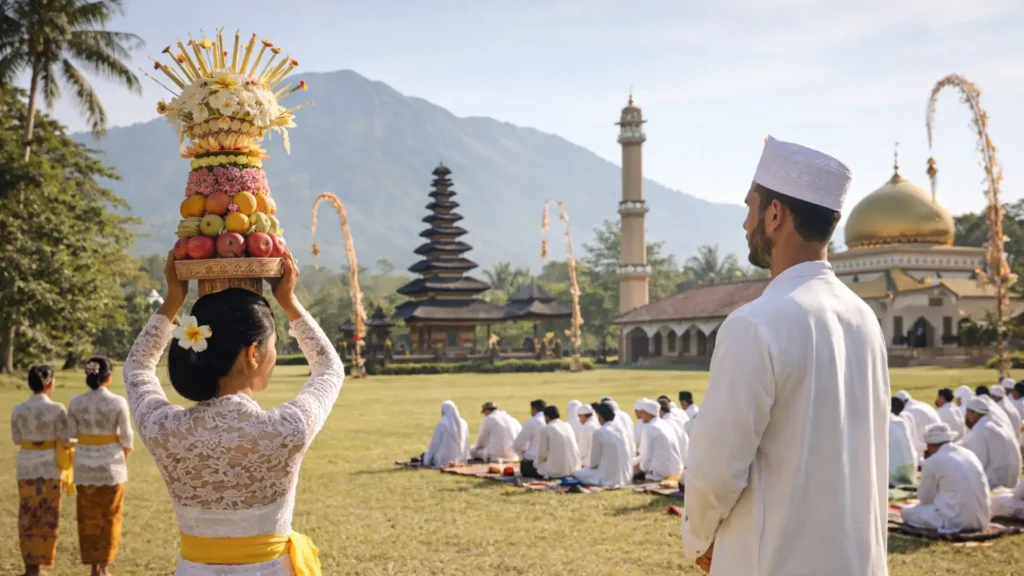
While January has fewer big festivals than some other times of year, there are several holidays and cultural events to be aware of. The table below outlines key January 2026 dates (and a few notable events just beyond January) that travelers should note. We also highlight how some important religious festivals (Balinese and Islamic) shift dates from year to year, as this can affect travel planning.
| Date (2026) | Event / Holiday | What to Expect for Tourists |
| Jan 16, 2026 (Fri) | Isra Mi’raj (Ascension of Prophet Muhammad) | A national Islamic holiday commemorating Prophet Muhammad’s night journey. It’s a day off nationwide[57]. There are no large public celebrations; Muslims may attend special prayers, but for tourists the main impact is that government offices, banks, and many local businesses will be closed. If you’re traveling on this date, plan for holiday closures (and potentially busier traffic the afternoon before, as people start a long weekend). Tourist sites, resorts, and restaurants in touristy areas usually operate as normal. |
| Galungan on June 17 & Kuningan on June 26 | Galungan & Kuningan (Balinese Hindu festivals) | (Not occurring in Jan 2026) – Galungan (and its sister holiday Kuningan, 10 days later) are important Balinese Hindu festivals celebrating the victory of good (dharma) over evil. They occur roughly every 210 days. In 2025 they fell in April and November; in 2026 the only Galungan will be on June 17 (with Kuningan on June 26)[58]. This means no Galungan in January* this year. Travelers in Bali in Jan 2026 won’t witness Galungan celebrations (marked by penjor bamboo poles along roads and temple ceremonies) – the next opportunity will be mid-year. |
| March 18 (Wed) – 19 (Thu) | Nyepi (Balinese New Year “Day of Silence”) | (Not in January) – Nyepi is the Balinese Saka New Year, a unique day of complete silence and shut-down across Bali. In 2025 it was on March 29; in 2026 it will occur on March 19[59]. Why mention it now? If you plan to extend your trip into March, be aware on Nyepi the entire island closes (airport, roads, everything) for 24+ hours. There are no Nyepi restrictions in Jan 2026 itself, but it’s good to know this huge event is coming in March. (The lively Ogoh-Ogoh parades happen on Nyepi Eve, March 18, 2026 – beyond January, but worth experiencing if your travel dates allow.) |
| Feb 17, 2026 (Tue) | Chinese New Year (“Imlek”) | This Lunar New Year celebration is a public holiday in Indonesia[60]. In 2025 it fell on Jan 29, but in 2026 it shifts to Feb 17. While technically in February, it’s worth noting for late-January travelers: you may see decorations (red lanterns, etc.) going up in malls and Chinatowns by late January. In Bali, Chinese New Year is not a major island-wide event, but hotels might have special dinners and there are often temple ceremonies at Chinese temples in towns like Denpasar. |
Holiday Date Shifts: Many Indonesian holidays follow lunar or local calendars, so their dates change year to year. For example, Nyepi moved from late March in 2025 to mid-March in 2026[59]. Galungan, which occurred twice in 2025 (April and November), happens only once in 2026 (June)[58] due to the 210-day cycle. Chinese New Year can fall in January or February (it was in Jan in 2025, but in 2026 it’s in Feb)[60]. Also, Islamic dates shift earlier each year on the Gregorian calendar: Ramadan in 2025 began in early March, whereas in 2026 it is expected to begin around mid-February[61] (meaning the Eid al-Fitr festivities will shift from late March in 2025 to mid-late March 2026[62]). Bottom line: if your late-January trip will stretch into February/March, be mindful of these moving holidays, as they can affect travel (e.g. peak domestic travel during Eid, or the complete shutdown on Nyepi in Bali).
Conclusion & Travel Insights
January 2026 offers a trade-off for travelers: on one hand, you’ll contend with rainy weather and a chance of travel delays (a flooded road here, a ferry cancellation there); on the other, you’ll enjoy Indonesia at its most lush and least crowded. Bali in particular takes on a more tranquil charm – the tourist surge of Christmas/New Year’s fades, leaving a calm that’s broken only by the sound of rain on palm leaves and the crash of higher monsoon waves on the shore. It’s a time when prices are friendlier to your wallet, and you can explore at a relaxed pace alongside locals and long-term expats[1][40].
Want to explore Bali or Indonesia in January without stressing over weather changes? BaliTraveller can help you plan a flexible trip with the best seasonal experiences — from surf and culture to day trips and island hopping.
📲 WhatsApp: +62 877-8577-7779 | 🌐 www.balitraveller.id