
A First-Timer’s Guide to Bali’s Local Food: Top Dishes You Must Try
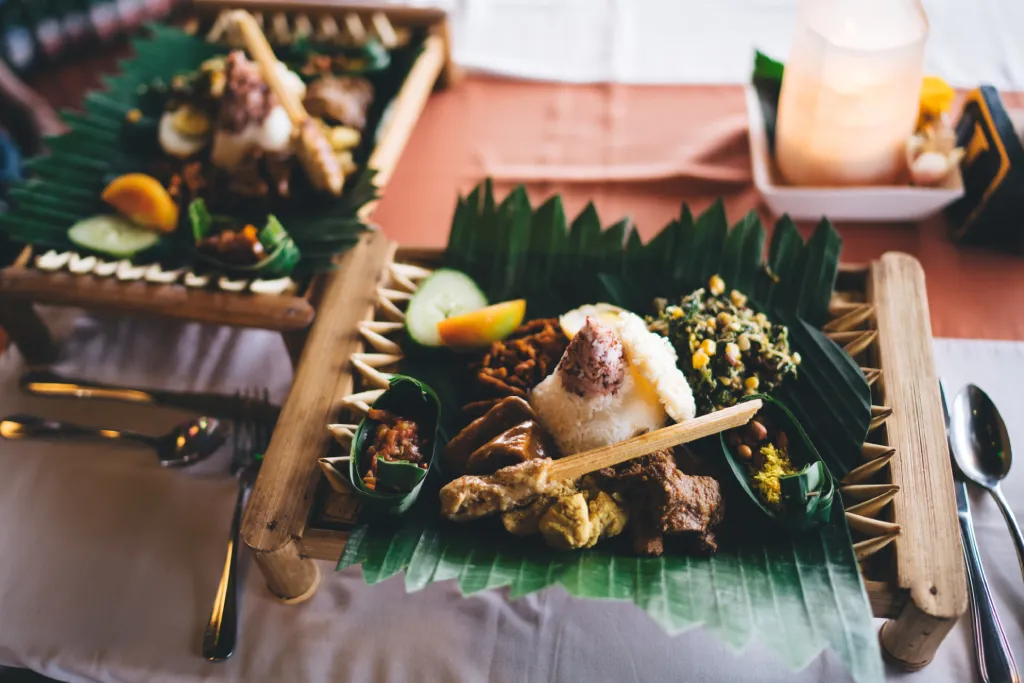
Balinese cuisine is a vibrant reflection of the island’s rich culture, agriculture, and centuries-old traditions. Unlike broader Indonesian cuisine, traditional Balinese food relies heavily on complex fresh spice pastes (Bumbu Bali), aromatic leaves, fresh coconut, and slow-roasting techniques over open fires or charcoal grills.
For first-time visitors looking to move beyond Western-style cafes and experience authentic island flavors, this comprehensive guide covers the iconic dishes you must try, key ingredients, and local dining etiquette.
1. The Secrets Behind Balinese Flavors: Bumbu Bali & Sambal
Before diving into specific dishes, it helps to understand what gives Balinese food its unique taste profile:
- Bumbu Bali (Base Genep): The foundational spice paste used in almost every traditional stew and marinade. It combines galangal, turmeric, ginger, kaempferia galanga (kencur), shallots, garlic, chili, candlenuts, coriander seeds, and shrimp paste (terasi).
- Sambal Matah: Bali’s iconic raw chili relish. Unlike cooked sambals, Sambal Matah is made from thinly sliced raw shallots, red bird’s eye chilies, lemongrass, kaffir lime leaves, sea salt, and a splash of hot coconut oil. It adds a fresh, fiery, and aromatic kick to grilled fish and poultry.
2. Iconic Balinese Dishes Every Traveler Must Try
1. Babi Guling (Balinese Roasted Suckling Pig)
Perhaps Bali’s most famous culinary export, Babi Guling was traditionally reserved for ceremonial feasts but is now a beloved daily lunch staple across the island.
- The Dish: A whole pig stuffed with Base Genep spices and cassava leaves, then slow-roasted over an open wood flame for hours.
- What’s on the Plate: A complete serving includes steamed rice, tender spiced meat, a piece of ultra-crispy golden skin, Lawar (a savory salad of minced vegetables, coconut, and spices), fried pork intestines, and pork blood sausage (Urutan).
- Where to Try: Warung Babi Guling Ibu Oka (Ubud) or Warung Babi Guling Pak Malen (Seminyak).
2. Ayam Betutu (Slow-Cooked Spiced Chicken)
Originating from Gilimanuk in West Bali, Betutu is a dish defined by deep spice saturation and tenderness.
- The Dish: Whole chicken (or duck, Bebek Betutu) rubbed thoroughly with rich Bumbu Bali paste, wrapped tightly in banana leaves or coconut husks, and slow-cooked or steamed for 8 to 12 hours until the meat falls off the bone.
- The Flavor: Rich, spicy, and deeply aromatic with a savory broth.
- Where to Try: Ayam Betutu Khas Gilimanuk (multiple branches across Bali).
3. Sate Lilit (Minced Meat Skewers)
Unlike traditional Indonesian satay made from cubed meat pieces, Balinese Sate Lilit offers a unique texture and flavor profile.
- The Dish: Minced seafood (mackerel/snapper) or chicken blended with grated coconut, coconut milk, lime juice, and aromatic spices. The seasoned mixture is wrapped around broad bamboo sticks or real lemongrass stalks and grilled over coconut-husk charcoal.
- The Flavor: Savory, slightly sweet, smoky, and citrusy.
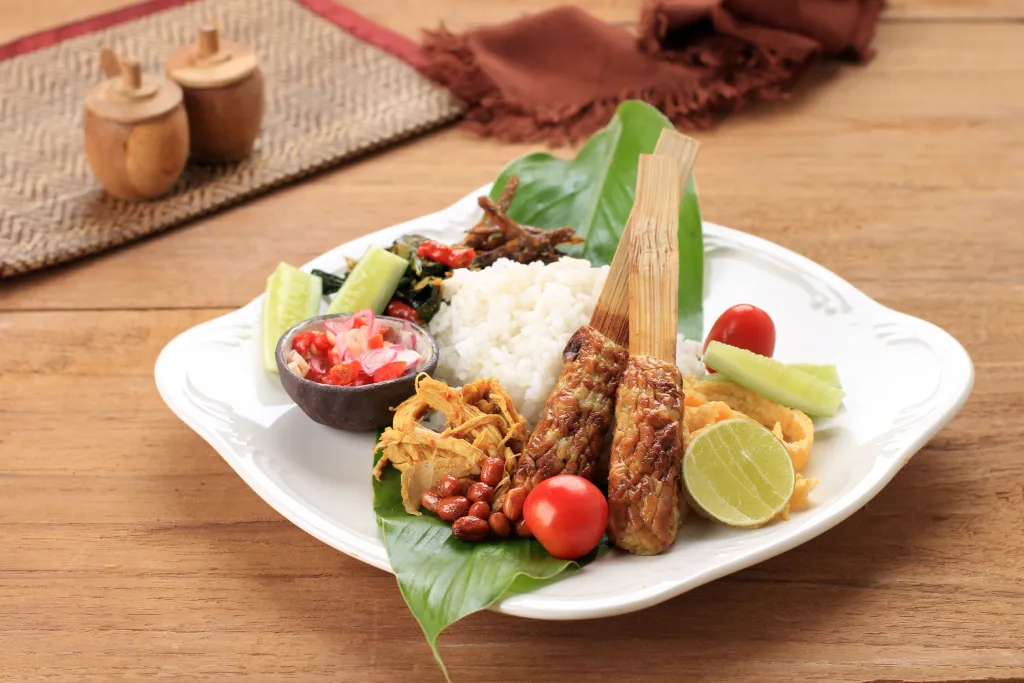
4. Nasi Campur Bali (Balinese Mixed Rice)
If you want to sample multiple local flavors in a single meal, Nasi Campur is the ultimate choice.
- The Dish: A central mound of steamed white or red rice surrounded by 5 to 7 small tasting portions of various dishes.
- Typical Components: Sate Lilit, shredded Betutu chicken, spiced boiled eggs, fried tempeh, Lawar, roasted peanuts, and a generous spoon of Sambal Matah.
5. Jimbaran Grilled Seafood (Ikan Bakar)
Dining on fresh seafood right on the beach is an essential Bali culinary experience.
- The Dish: Freshly caught red snapper, groupers, prawns, or squid marinated in sweet soy sauce, garlic, and coconut oil, grilled over open charcoal pits.
- Served With: Steamed rice, sautéed morning glory (Kangkung), and an array of fresh sambals.
- Where to Try: Oceanfront seafood warungs along Jimbaran Bay or Kedonganan Beach.
6. Lawar (Traditional Spiced Vegetable & Meat Salad)
A dish deeply rooted in Balinese ritual cooking.
- The Dish: Finely chopped long beans, young jackfruit, grated fresh coconut, and minced meat (chicken, pork, or turtle in traditional ceremonies) tossed with rich spice pastes and lime juice.
- Note: Traditional versions (Lawar Merah) may contain fresh animal blood for rich flavor, while tourist-friendly versions (Lawar Putih) skip the blood entirely.
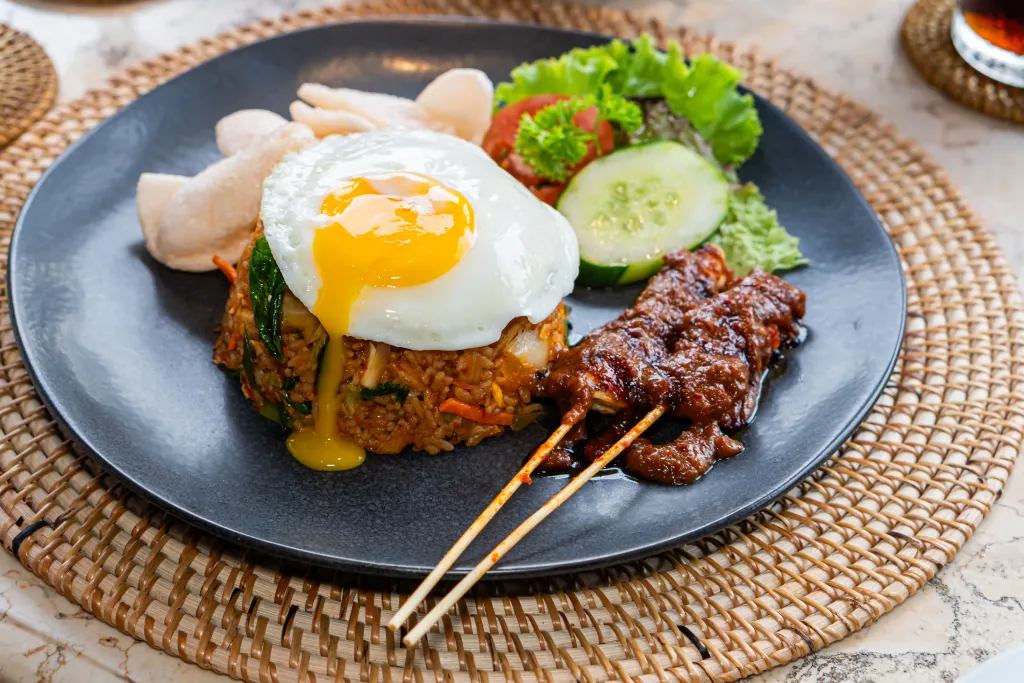
7. Nasi Goreng & Mie Goreng (Classic Indonesian Staples)
While popular across all of Indonesia, the Balinese take on fried rice (Nasi Goreng) and fried noodles (Mie Goreng) often includes local herbs, fresh sambal, and a side of Sate Lilit.
3. Practical Tips for Eating Like a Local
- Look for the Word “Warung”: A warung is a family-owned local restaurant or food stall. They offer the most authentic flavors at a fraction of Western resort prices (typically IDR 25,000–50,000 / $1.50–$3.50 per plate).
- Timing Matters for Babi Guling: Babi Guling places usually roast their pigs early in the morning. Visit between 11:00 AM and 1:00 PM for the freshest, crispiest skin before popular spots sell out.
- Mind the Spice Level: Balinese food can be genuinely hot. If you prefer low heat, ask for “tidak pedas” (not spicy) or request your sambal on the side (“sambal di pisah”).
- Water Safety: Stick to bottled or filtered water (Air Mineral) and avoid drinking untreated tap water.
Why Work with Bali Traveller?
Planning a destination wedding should be an exciting and joyful experience—not a stressful one. At Bali Traveller, we are dedicated to making your dream wedding in Bali effortless, memorable, and truly unforgettable.
With our local expertise, trusted partners, and personalized service, we take care of every detail so you can focus on celebrating one of the most important moments of your life. Bali Traveller can coordinate accommodation, transportation, venues, dining, activities and guest movements through one central point of contact.
Contact Bali Traveller
Email: sales@balitraveller.id
Telephone: +62 877 8577 7779
Website: www.balitraveller.id
It’s Better in Bali.