
How to Travel Bali on a Budget: A Complete Cost Breakdown for Solo Travelers

Bali remains one of the world’s premier destinations for solo travelers, backpackers, and budget-conscious explorers. Despite its growing reputation for luxury resorts and high-end beach clubs, the Island of the Gods remains accessible to traveler profiles across every price point.
With smart planning, understanding local pricing structures, and making strategic choices about transport and dining, you can experience Bali’s world-class beaches, ancient temples, and vibrant culture comfortably on a budget. This comprehensive 2026 guide breaks down exact daily and monthly expenses, hidden costs, and practical money-saving strategies.
1. Estimated Daily & Weekly Costs for Solo Travelers
To help you budget accurately, here is a breakdown of average baseline expenses for a solo traveler staying in mid-range hostels or private guesthouses:
| Expense Category | Daily Budget (USD) | IDR Equivalent (Approx.) |
| Accommodation (Hostel Bed / Private Guesthouse Room) | $10 – $20 | IDR 160,000 – 320,000 |
| Food & Dining (Local Warungs + Occasional Cafe) | $6 – $12 | IDR 95,000 – 190,000 |
| Transportation (Scooter Rental + Fuel or Gojek/Grab) | $5 – $8 | IDR 80,000 – 130,000 |
| Temple Fees & Activities (Tickets, Waterfalls, Sims) | $4 – $8 | IDR 65,000 – 130,000 |
| Total Daily Cost | $25 – $48 | IDR 400,000 – 770,000 |
2. Accommodation on a Budget: Where to Stay
Accommodation will likely be your largest expense, but Bali offers some of the best-value lodgings in Southeast Asia.
- Social Hostels ($8 – $15 / night): Ideal for solo travelers looking to meet people. Areas like Canggu, Ubud, and Kuta are filled with modern hostels offering air conditioning, privacy curtains, fast Wi-Fi, and swimming pools.
- Private Guesthouses / Homestays ($15 – $25 / night): If you prefer private space, local Balinese family homestays (guesthouses) provide clean private rooms with ensuite bathrooms, AC, and often include complimentary breakfast.
- Long-Term Stay Discounts: If you plan to stay in one region (e.g., Ubud or Sidemen) for more than a week, ask the host directly for weekly or monthly rates. Discounts can range from 20% to 40% off the daily rate.
3. Food & Dining: Eating Well Without Overspending
Dining out in Bali can range from $1.50 at a local family eatery to $50+ at a coastal resort. The key to staying on budget is balance.
- Eat at Local Warungs: Local eateries serve delicious, fresh meals like Nasi Campur (mixed rice), Nasi Goreng (fried rice), and Ayam Betutu for IDR 25,000–40,000 ($1.50–$2.50). Eating local for 2 out of 3 daily meals can save you up to 70% on food expenses.
- Filter Water: Avoid buying multiple plastic water bottles daily. Bring a reusable insulated water bottle and fill up using filtered water stations available at most hostels and guesthouses.
- Supermarket Snacks: Stock up on fresh tropical fruit (bananas, mangosteens, dragonfruit) at traditional morning markets (Pasar Pagi) rather than Western supermarkets.

4. Getting Around: Budget Transportation Strategies
Transportation costs can add up quickly if relying solely on private taxis. Here are the most cost-effective ways to navigate the island:
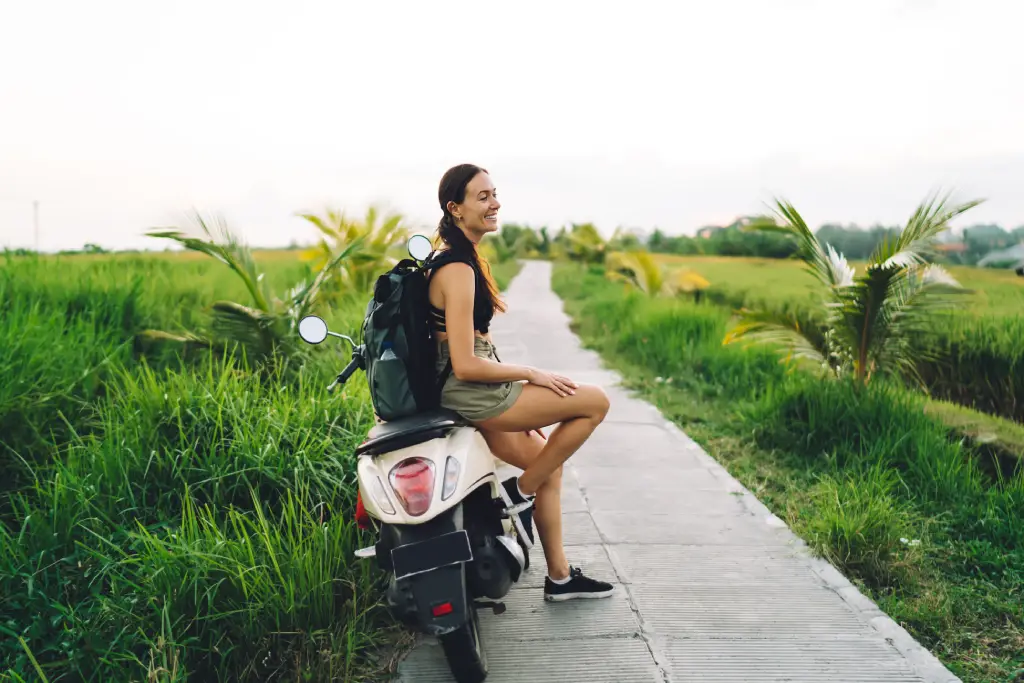
- Scooter Rentals ($5 – $8 / day): Renting an automatic scooter (like a Honda Vario or Yamaha NMAX) is the cheapest and fastest way to move around. Weekly rentals often drop to $35–$45 per week. Note: Ensure you hold a valid driver’s license with an International Driving Permit (IDP) and always wear a helmet.
- Ride-Hailing Apps (Gojek & Grab): Avoid hailing unmetered street taxis. Download Gojek or Grab to order scooter taxis (GoRide / GrabBike) for short distances. They offer fixed, low rates starting around IDR 12,000 ($0.75).
- Shared Airport Transfers: Rather than booking expensive private airport pickups, use the official Grab Lounge at Ngurah Rai International Airport (DPS) or coordinate a shared shuttle through your hostel.
5. Sightseeing & Activities on a Shoestring Budget
Many of Bali’s natural attractions are naturally low-cost or free to explore:
- Temple & Waterfall Entry Fees: Most major temples (such as Tirta Empul or Tanah Lot) and waterfalls (Tegenungan, Kanto Lampo) charge entry fees between IDR 20,000 and IDR 75,000 ($1.30–$4.80).
- Free Activities: Enjoying beach sunsets, hiking the Campuhan Ridge Walk in Ubud, exploring rice terraces, and visiting local morning markets cost virtually nothing.
- Bargaining Etiquette: When shopping for souvenirs at traditional markets (like Ubud Art Market or Sukawati), respectful bargaining is expected. Start by offering around 50–60% of the vendor’s initial quote and negotiate politely.
6. Top 3 Money-Saving Rules for Bali
- Travel During the Shoulder Season: Visit during April–May or September–October. You will experience good weather, lower flight prices, cheaper room rates, and significantly fewer crowds than during peak months (July–August and December).
- Use Multi-Currency Digital Cards: Avoid paying high bank foreign exchange fees by using debit cards like Wise or Revolut. Always withdraw cash from official major bank ATMs (BCA, Mandiri, BNI, BRI) inside secure booths.
- Get Local SIM/eSIM Early: Avoid roaming charges by picking up a local SIM card (Telkomsel offers the best island coverage) or configuring an eSIM before arrival.
Why Work with Bali Traveller?
Planning a destination wedding should be an exciting and joyful experience—not a stressful one. At Bali Traveller, we are dedicated to making your dream wedding in Bali effortless, memorable, and truly unforgettable.
With our local expertise, trusted partners, and personalized service, we take care of every detail so you can focus on celebrating one of the most important moments of your life. Bali Traveller can coordinate accommodation, transportation, venues, dining, activities and guest movements through one central point of contact.
Contact Bali Traveller
Email: sales@balitraveller.id
Telephone: +62 877 8577 7779
Website: www.balitraveller.id
It’s Better in Bali.